+44 (0)20 7819 9770
 info@ampersandtravel.com

Beyond the Taj Mahal: Discovering Agra’s Mughal Heritage
The Taj Mahal may be Agra’s - and India’s - most famous landmark, but it’s far from the city’s only architectural masterpiece.
Beyond the crowds and white marble perfection lies a collection of lesser-known monuments that tell the broader story of the Mughal Empire - one of creativity, cultural fusion and astonishing ambition. In our opinion, there is so much more to explore in Agra and its surroundings than just one monument.
The Mughal dynasty ruled much of India between the 16th and 19th centuries, leaving behind a built legacy defined by scale, artistry and synthesis. Persian, Central Asian and Indian influences merged to form an architectural style unlike any other — domes and minarets softened by floral carvings, sandstone and marble united by symmetry and light.
Agra, once the imperial capital, remains one of the finest places to trace that evolution in stone.
Agra Fort, Agra
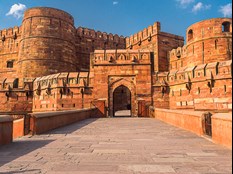
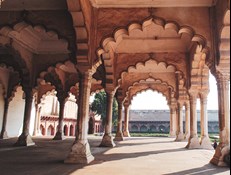
Dominating the banks of the Yamuna River, Agra Fort is one of India’s finest surviving Mughal fortresses, a walled city of palaces, mosques and marble pavilions enclosed by massive red sandstone ramparts. Begun by Emperor Akbar in 1565 and later refined by Shah Jahan, its blend of robust military design and delicate detailing reflects the evolution of Mughal architecture. It also offers spectacular views over the Taj Mahal, especially from the Musamman Burj.
Jama Masjid, Agra
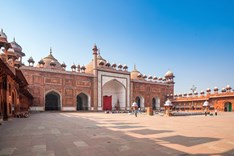
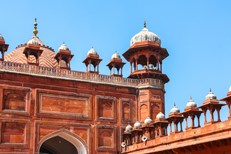
Less photographed but no less striking than the Taj Mahal, Agra’s Jama Masjid is a major example of Mughal-era mosque architecture. Built by Shah Jahan’s daughter, Jahanara Begum, in 1648, the building is made primarily of warm red sandstone and accented with delicate white-marble inlays. Its vast courtyards and solemn domes embody the scale and sophistication of the period. It remains a working place of worship today.
Chini Ka Rauza, Agra

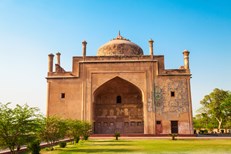
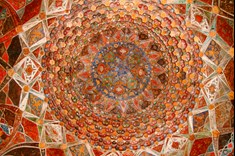
The tomb of Afzal Khan Shirazi, a Persian poet and minister in Shah Jahan’s court, Chini Ka Rauza is distinctive for its turquoise, yellow and green glazed tiles. Though weathered by centuries, they remain among the earliest examples of such craftsmanship in India, a testament to the artistic exchange that defined the Mughal era.
Itimad-ud-Daulah's Tomb, Agra
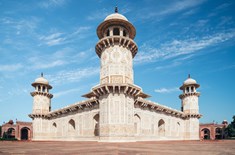
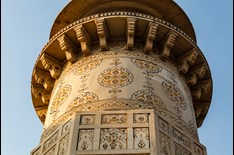
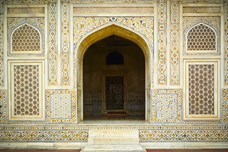
Sometimes called the Baby Taj, this exquisite white marble mausoleum was built for the grandfather of Mumtaz Mahal - Shah Jahan’s beloved queen. Predating the Taj Mahal, it directly inspired its design. The inlay work is fine and floral, the lattice windows intricately carved, and the gardens peaceful- a place that distills Mughal elegance on a more intimate scale.
Akbar's Tomb, Sikandra
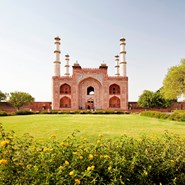
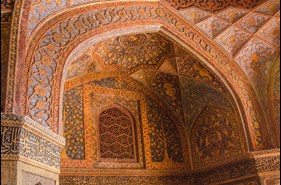
Located in nearby Sikandra, about a 30-minute drive from the city, Akbar’s Tomb represents a transitional phase in Mughal architecture - blending bold, early imperial design with the refined ornamentation that would flourish under his successors. Its monumental gateways and geometric patterns draw on Islamic, Hindu, Buddhist and Jain influences, reflecting the emperor’s famously open and eclectic spirit.
Fatehpur Sikri
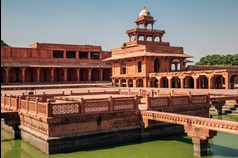
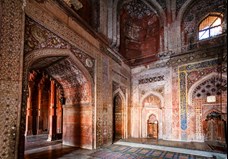
Less than an hour’s drive west of Agra, Fatehpur Sikri was Emperor Akbar’s capital for little more than a decade, yet its influence has lasted centuries. Built entirely in red sandstone, the city was a statement of Mughal vision and ingenuity, blending Persian planning with Indian craftsmanship. Today its palaces, courtyards and audience halls remain remarkably intact: the Jama Masjid, the airy Panch Mahal and the intricately carved Buland Darwaza all speak of a brief but brilliant moment when architecture, faith and empire came together in new and inspiring ways.
A Broader Legacy
Exploring these monuments gives a sense of Agra not just as the city of the Taj Mahal, but as a historic centre of empire, artistry and real experimentation.
For travellers willing to go beyond the obvious, Agra rewards curiosity with some of the most compelling architecture in India.
Thinking about exploring Mughal India? Get in touch with our destination specialists at info@ampersandtravel.com to start planning a tailor-made journey through Agra and beyond.