+44 (0)20 7819 9770
 info@ampersandtravel.com

Exploring India with James Jayasundera: From Mumbai to Rajasthan
For more than thirty years, Ampersand’s founder James Jayasundera has travelled the length and breadth of India. His approach blends the experience of a seasoned explorer, the curiosity of a first-time visitor and the deep cultural insight of somebody who has studied the country from every angle.
Few travellers know India with such fluency: its varied landscapes, ancient architecture, regional craftsmanship and the countless cultural threads that connect this vast subcontinent together.
This October, James returned to India to lead a very special client journey - a colourful route through Mumbai and Rajasthan. What follows is a glimpse into their itinerary: part cultural immersion, part architectural study and part colourful celebration.
Mumbai — India’s Western Gateway
The journey began in Mumbai, a city James considers essential for understanding contemporary India.
The group stayed at the Taj Mahal Palace - an iconic architectural landmark. Opened in 1903, its Indo-Saracenic architectural style blends with Moorish and Florentine details to create a unique structure admired by almost everybody that visits. A hotel James has stayed at for several decades, it’s a property that perfectly captures the confident mood of early-twentieth-century Mumbai.
From the harbour just opposite the hotel, just next to the historic Gateway of India, James led the group to Elephanta Island by boat.
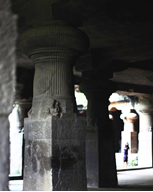
The island’s 5th–6th century rock-cut cave temples - carved from solid basalt - remain among western India’s most impressive expressions of early Hindu art. Even after years of visiting, the caves always impress with their immense scale, ancient foundations and remarkably sophisticated artistry.
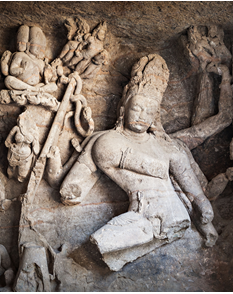
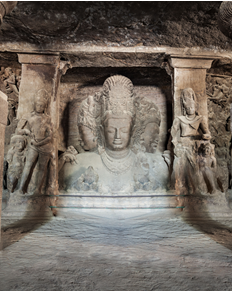
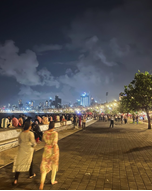
Back in the city, time was spent visiting Marine Drive, the sweeping C-shaped promenade that has framed Mumbai’s skyline for generations.
This is one of the clearest windows into the city’s energy, coastal geography and distinctive brand of urban life, especially when visited at night - a stroll along the coast offers a glimpse into the day-to-day of normal Mumbaikers.
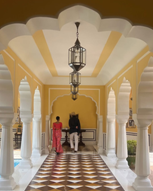
Rambagh Palace, Jaipur — Royal Heritage and City Life
From the coast, the journey moved into Rajasthan, beginning at Rambagh Palace in Jaipur.
Originally built in 1835 and later expanded by Sir Samuel Swinton Jacob - a leading architect of the Indo-Saracenic movement - the palace - surrounded by vast gardens - remains one of India’s most luxurious princely residences, and a simply wonderful place to stay.
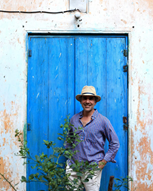
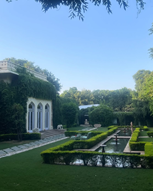
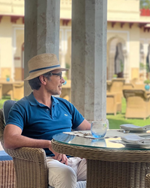
Mornings began in the gardens before entering Jaipur’s Old City. James guided the group through gateways, temple courtyards and market streets, pausing to meet craftspeople behind Jaipur’s artistic identity: paghdi (turban) makers, sweet specialists preparing fresh coconut burfi and artisans working behind the city’s distinctive painted facades and carved doorways.
This type of encounter is why Indophiles return to Rajasthan time and time again - the opportunity to interact with skilled individuals directly connected to the city’s heritage.
Towards Barwara — Bridges, Villages and Fort Walls
Travelling south, the route then crossed the Banas River at Tonk - a territory once ruled by the Pashtun Nawab Amir Khan. The journey took the group to Six Senses Fort Barwara, a 14th-century structure that has been reimagined into a contemporary retreat. Having followed the restoration over several years, it was pleasing to see that the original stonework and spatial proportions remain largely intact.
The group visited Chauth ka Barwara, a hilltop temple with links to Queen Chandrawati of the Chauhan dynasty, and explored nearby villages where daily life continues much as it has for generations.
Amanbagh — Rural Life & the “Hour of Cowdust”
The next and final stop was Ajabgarh, home to Amanbagh, an exquisite Aman Resort located in the heart of one of the region’s most scenic rural landscapes.
The group also joined one of the property’s signature go-dhuli outings — an afternoon drive through nearby villages as cattle, goats and buffalo are herded home for the evening. Known as a cow dust tour, it offers a window into rural life, made especially memorable by the warm welcome guests receive from local families, who frequently invite guests in for chai.
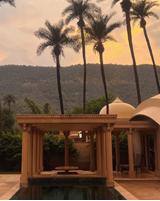
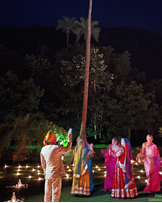
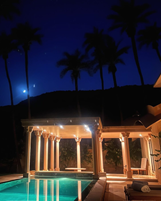
Amanbagh was the location chosen for a special birthday celebration that took place over several days. Festivities included traditional dress, vast candle-lit set-ups and dancing under the stars - a perfect way to end a very memorable trip.
Thinking about exploring India? Our specialists can design a tailor-made itinerary through Mumbai, Jaipur and rural Rajasthan. Get in touch at info@ampersandtravel.com