+44 (0)20 7819 9770
 info@ampersandtravel.com

South Korea: Two Perspectives from the Road - James & Chloe in Conversation
James: Flying into Incheon, I was struck by how mountainous the country is, far more rugged than many people imagine. From the air, everything feels deliberate and well planned. The infrastructure is vast: enormous highways, wide boulevards, an airport that feels genuinely global. Seoul can feel intense at first. Traffic moves quickly, and certain districts have a slightly austere, functional quality. Yet there is immediate momentum. You sense this is a country in motion.
Chloe: For me, it felt buzzy and unapologetically contemporary. Within an hour of landing you can move from the glass towers around the Four Seasons to the courtyards of Gyeongbokgung Palace. That contrast is thrilling. There’s a pulse to Seoul; confident, creative, and slightly edgy.
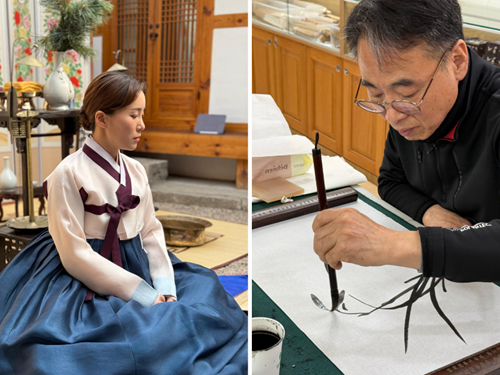
James: In Seoul and Busan, Korea feels unmistakably modern, yet tradition is highly visible. Hanbok are worn not only by tourists but by locals too, and Confucian values still quietly shape daily life. The link between past and present may not feel as seamlessly aesthetic as in Japan, but it is far stronger than in most Western countries.
Chloe: What struck me was that tradition doesn’t feel staged, it feels active. You see young couples in traditional dress taking photographs, but you also sense deeper cultural continuity - in ritual, respect, and the rhythm of daily interactions.
James: Korea sits somewhere between Japan and China, temperamentally rather than geographically. It has some of Japan’s refinement and much of China’s dynamism, yet it is distinct from both. The pace is fast. There is less visible restraint, more overt ambition. It feels like a country determined to move forward.
Chloe: I found it more cohesive than China and less reserved than Japan. There’s creativity and confidence, but also a certain rawness. It feels younger, both culturally and emotionally.
James: The global image, in terms of K-pop, skincare, cinema, is not exaggerated. Korea is confident. There is boldness and clear cultural self-belief. Beyond pop culture, Seoul’s contemporary art scene is remarkably strong. Its museums are impressively curated - ambitious, thoughtful and genuinely world class.
Chloe: Yes, the exported image is real, but it’s only one facet. There’s seriousness beneath the gloss. The art, the design, the architecture, it feels intentional. Not derivative or performative.
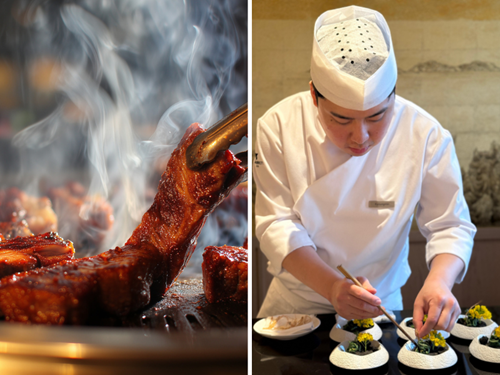
James: Considerably more. Kimchi, barbecue and bibimbap are constants, but fermentation, balance and health sit at the core. Food is often approached almost as medicine, designed to restore and support the body. Even small details (such as salt rarely appearing at the table) reflect how seasoning is integrated into the cooking itself.
Chloe: And the range is enormous. One evening it’s street food, like hotteok or tteokbokki, the next it’s refined temple cuisine. It moves between bold and quiet, communal and ceremonial. It’s one of the most interesting food cultures in Asia.
James: There are strong hotels, particularly in Seoul, but the overall level of polish does not yet consistently rival Japan at its very best. Domestic travellers do not always prioritise indulgent luxury in the same way. That said, the market is evolving quickly.
Chloe: I agree, but there are standouts. The Park Hyatt in Busan felt international and sophisticated, and the newer properties are clearly raising standards. It feels like a market on the cusp of something.

James: South Korea is genuinely a year-round destination, but the character shifts quite dramatically with the seasons. Spring and autumn are generally the most comfortable. April and May bring blossom and clear light, while late September and October offer crisp air and extraordinary colour in the mountains. The infrastructure copes well with seasonal change, so travel remains straightforward throughout the year.
Chloe: Each season feels distinct; Spring is soft with cherry blossom and fresh green hills, whereas Autumn is perhaps the most visually striking. Summer can be hot and humid in Seoul, though Busan and Jeju benefit from coastal breezes, and Winter is cold but beautiful, especially in traditional villages or in the mountains.
James: The entrepreneurial drive. The scale of what South Korea has achieved in half a century is extraordinary. There is impatience, but it is tied to ambition, a sense that progress must continue.
Chloe: For me, it was the balance between resilience and optimism. Visiting the UN Cemetery and then walking through Gamcheon’s colourful streets in Busan, you experience a country very aware of where it has come from, and equally determined about where it is going.
If you are considering a tailor-made journey to South Korea, our specialists would be happy to talk through the possibilities and shape an itinerary that reflects how you like to travel. Contact the team at info@ampersandtravel.com.