+44 (0)20 7819 9770
 info@ampersandtravel.com

South Korea vs Japan & China - How The Country Compares
South Korea often comes up in conversations about East Asia alongside its neighbours: Japan, with its long-established appeal and cultural visibility, and China, with its vast scale and historical depth.
Yet for travellers who have already spent time in Japan or China, we believe that South Korea offers something both distinct and compelling.
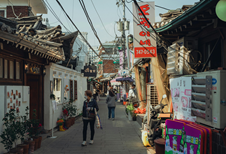
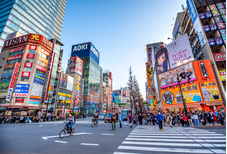
South Korea & Japan: Intimacy vs structure
Japan is often defined by refinement and structure. Its rituals, aesthetics and systems have been carefully codified over centuries, and part of the pleasure of travelling there lies in observing how seamlessly these systems function.
South Korea feels more fluid. Tradition and modern life coexist without quite the same sense of formal separation. A day in Seoul might move from a centuries-old palace to a contemporary neighbourhood shaped by cafés, galleries and local markets, without the feeling of stepping between worlds.
For travellers who love Japan but are curious about a place that feels less choreographed, South Korea can feel refreshingly direct. Cultural encounters are immediate, food culture is bold and sociable and daily life is more visibly lived on the street.
South Korea & China: Focus vs scale
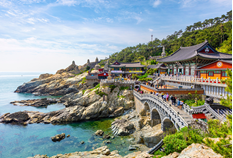
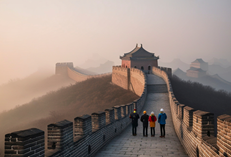
China’s scale is one of its defining features. Its landscapes, cities and historical narratives are vast, often requiring long journeys and careful logistical planning to experience well. Travel there can feel monumental, both rewarding and demanding.
South Korea, by contrast, is compact and cohesive. Distances are short, transport is efficient and it is possible to experience a wide range of environments within a single journey.
Cityscape, mountains, coastline and rural landscapes are all within easy reach, particularly in coastal cities such as Busan, where urban life, beaches and surrounding countryside sit closely together.
This makes South Korea particularly appealing to travellers who value depth over breadth. Rather than covering ground, the emphasis is on spending time well.
A cultural identity of its own
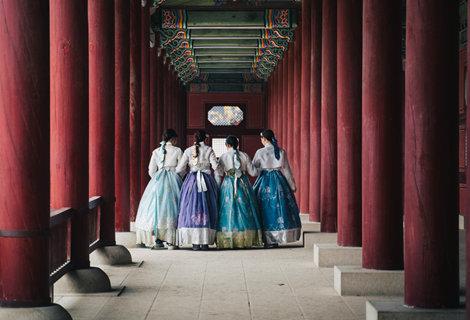
South Korea is not a hybrid of its neighbours. Its identity is shaped by a strong sense of national culture, visible in everything from architecture and language to food and social customs.
Cuisine alone offers a clear distinction. Meals are communal, seasonal and deeply regional, with fermentation, spice and shared dishes at the centre. It is an accessible way into the culture, and one that often becomes a highlight of the journey.
There is also a strong creative energy running through contemporary South Korea, expressed in design, film, fashion and art. This sits comfortably alongside older traditions, rather than replacing them.
What kind of traveller South Korea suits
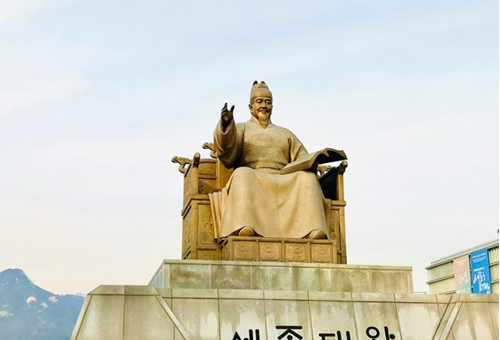
South Korea works particularly well for travellers who have already experienced Japan and are looking for something different, without leaving East Asia behind. It also suits those who want a culturally rich journey that feels manageable in length and pace.
It’s not a destination with a list of must-sees to tick off. Instead, it’s one that works for those looking to understand how a country lives now, while remaining closely connected to its past.
For travellers looking for a well-balanced introduction, our suggested itinerary ‘An Introduction to South Korea: From Seoul to Jeju Island’ brings together time in Seoul, the coastal energy of Busan and the volcanic landscapes and slower rhythm of Jeju Island, offering a considered overview of the country’s contrasts.
If you are considering South Korea as part of a wider East Asia journey, or as a thoughtful alternative to a return visit to Japan or China, our specialists would be happy to talk through the possibilities and shape an itinerary that reflects how you like to travel.
Contact the team at info@ampersandtravel.com