+44 (0)20 7819 9770
 info@ampersandtravel.com


Habarana
Habarana is not, in itself, a destination. The village sits at an important junction in Sri Lanka's North Central Province, where the road north to Anuradhapura meets the route east towards Trincomalee, and the road south leads back through Dambulla to Kandy and eventually Colombo. What surrounds it, however, is another matter entirely.
The Cultural Triangle, defined by the ancient capitals of Anuradhapura, Polonnaruwa and Kandy, with Sigiriya and Dambulla at its heart, represents the most concentrated accumulation of early Sinhalese civilisation anywhere on the island. Habarana sits at the centre of all this, which is precisely why it matters. Sigiriya lies seventeen kilometres away, Dambulla twenty, Polonnaruwa around fifty and Anuradhapura sixty; none requires more than an hour by road. For those wanting to explore the Triangle's principal sites without unnecessary logistical complication, Habarana is the obvious base.
The sites themselves warrant careful pacing. Sigiriya, the fifth-century rock fortress built by King Kasyapa on a two-hundred-metre outcrop of granite, is the obvious centrepiece. The climb is straightforward but requires an early start before the heat builds. Adjacent Pidurangala Rock offers comparable views of Sigiriya with considerably fewer visitors, and is well worth the modest effort. Polonnaruwa, Sri Lanka's medieval capital, requires at least half a day, preferably more, to do justice to its palace ruins, rock carvings and vast reservoir. Dambulla's cave temple complex is best visited early, when the light catches the paintings at their most atmospheric.
Minneriya National Park, fifteen kilometres east of Habarana, adds a wildlife dimension that distinguishes the area from archaeological tourism. Between July and October, the dry season draws large numbers of Asian elephants to the ancient reservoir, creating one of the largest seasonal gatherings anywhere in Asia. Kaudulla National Park, twenty kilometres north, offers an alternative during the shoulder months when the Minneriya herd moves on.
Three nights here is the minimum that allows meaningful engagement with the major sites. Four permits a more comfortable rhythm, accommodating early starts and slower afternoons. Those with a deeper interest in archaeology, or who wish to include lesser-visited sites such as the forest monastery of Ritigala, the rock fortress of Yapahuwa and the ancient city of Anuradhapura, should consider five.
Within a broader Sri Lankan itinerary, Habarana sits naturally between Kandy and the north, or as a mid-point between Colombo and the east coast. The drive from Kandy takes around two and a half hours; from Colombo closer to three and a half hours, long enough to justify an overnight stop in Kandy if the schedule allows.
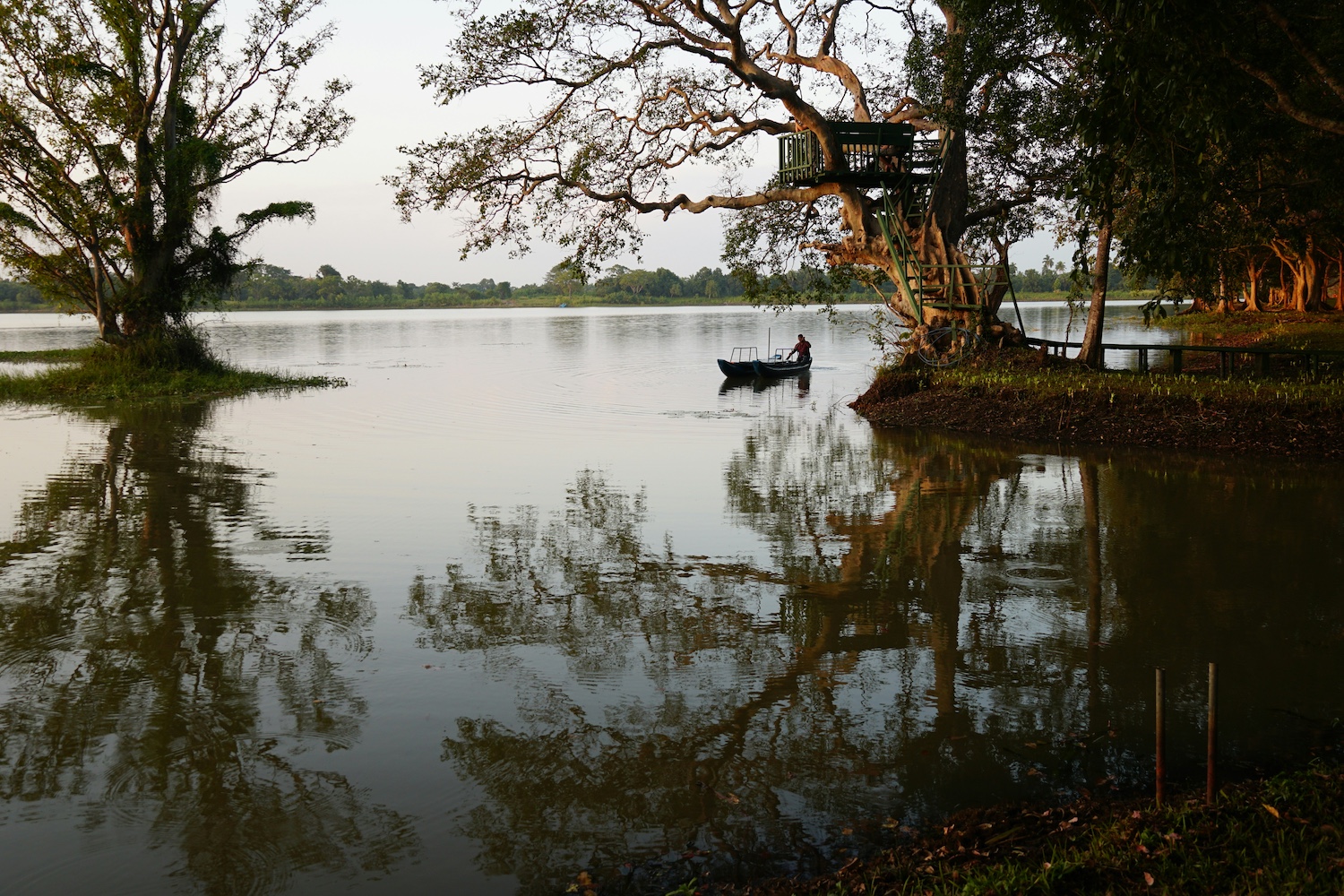
What Habarana offers, ultimately, is practicality in the service of extraordinary things. The village itself requires no particular affection, but the landscape of tanks, forest and open plains surrounding it, and the ruins that emerge from that landscape, provide a compelling reason to linger.


 Places of Interest
 Accommodation
Travelling is like flirting with life. It's like saying, 'I would stay and love you, but I have to go; this is my station.
Lisa St. Aubin de Teran